
“Any sufficiently advanced technology is indistinguishable from magic.”
“This is what true correction feels like!”
Eureka moment!
01
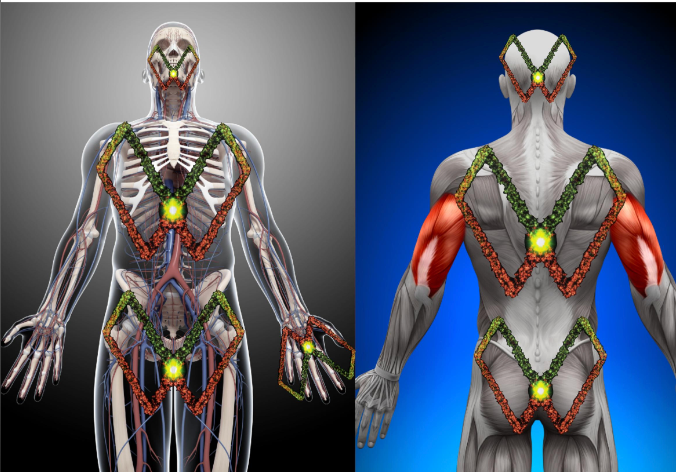
What is Hydro Structural?
02
What is Bio Hydraulics?
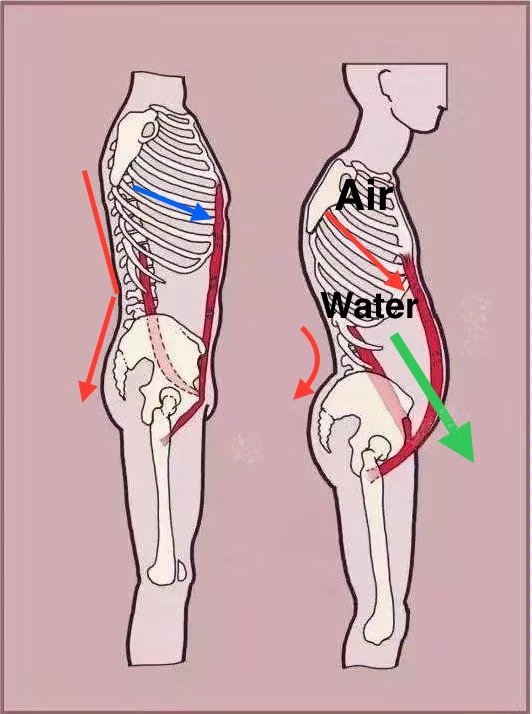
What is Bio Hydraulics?
Understanding Bio-Hydraulics: How We Use Internal Pressure to Correct the Spine
03
The Most Misunderstood Structure in Human Anatomy
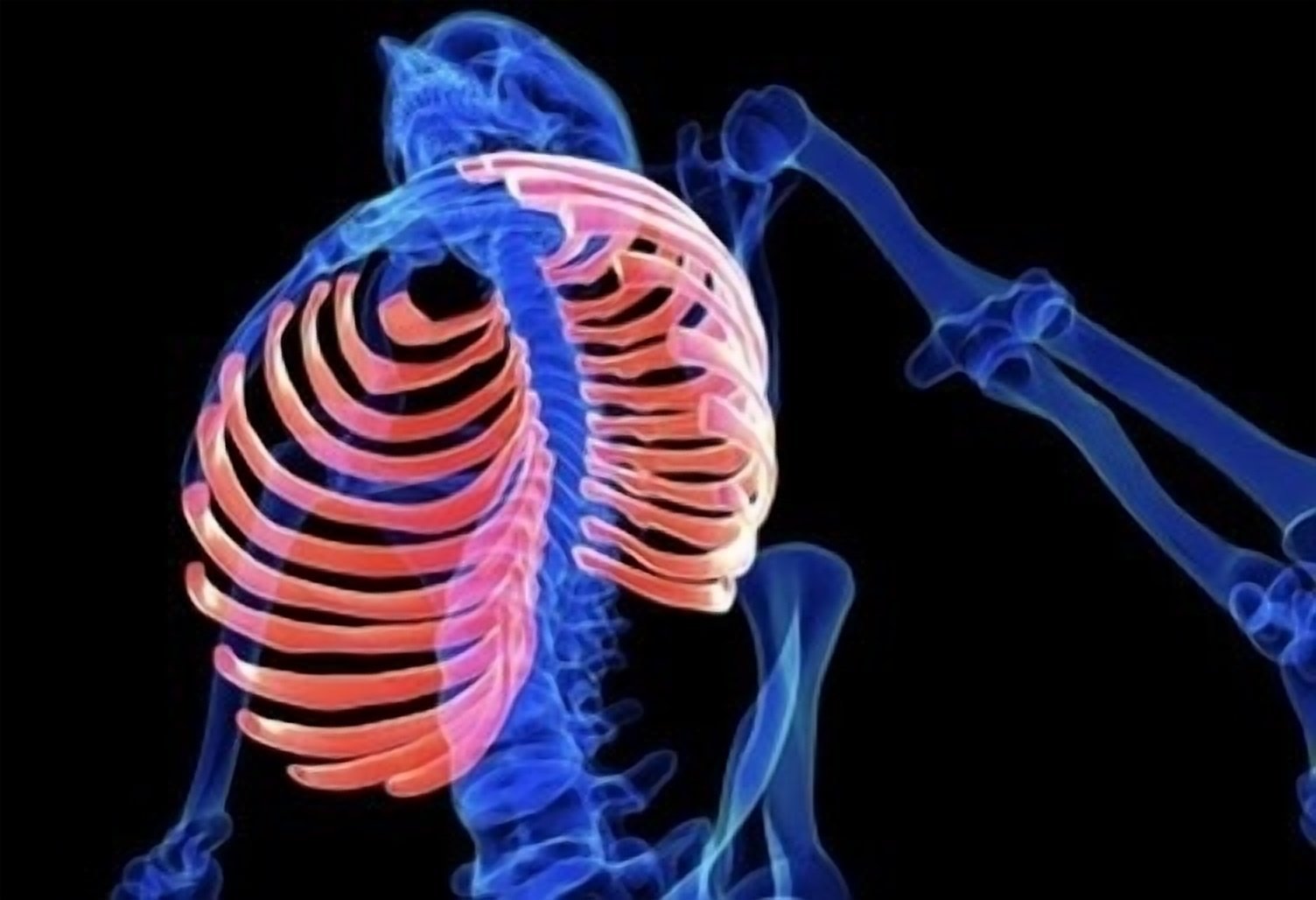
The Most Misunderstood Structure in Human Anatomy
Most practitioners overlook one of the most critical—and most misunderstood—elements of human physiology:
👉 “The Problem Everyone Feels—And Why No One Has Been Able to Fix It”
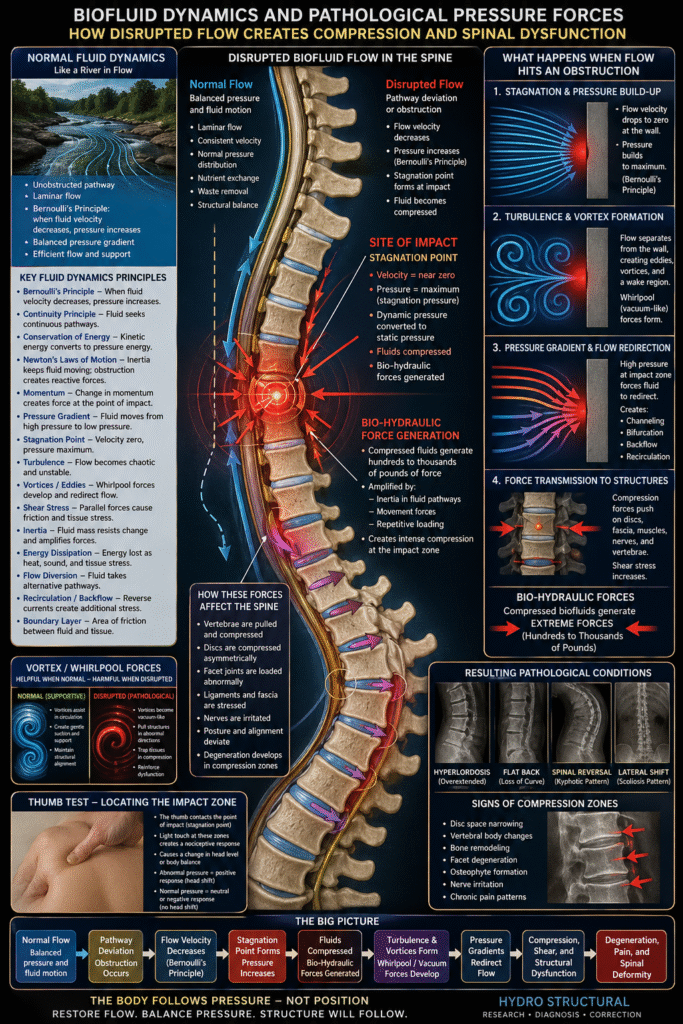
Balancing Pathological Pressure Forces in the Body
What we are actually addressing is not “misaligned bones,” but dangerous pathological pressure conditions inside the body that make a person far more vulnerable to injury.
When the body becomes overpressurized, it is not in a stable state—it is under abnormal internal load. In this condition:
Movement becomes painful or even dangerous
Small motions can trigger disproportionately large internal force spikes
The system is closer to its mechanical breaking point
This is not weakness—it is pressure overload.
The Thumb Test: Locating Pressure Distortion
The thumb test is not identifying what you have been taught—it is locating:
Zones of overpressurization
Areas where biofluids and tissues have deviated from their natural pathways
Points of stagnation and force accumulation
In these regions:
Fluid motion is disrupted
Pressure builds unevenly
Both high-pressure compression zones and low-pressure collapse zones develop
And critically:
The bodies structure—especially the spine—follows these pressure deviations, not the other way around.
Each body expresses this differently, depending on its unique pressure distribution.
Pathological Pressure in the Body: A Fluid Dynamics Perspective
When biofluid pathways in the body deviate from their normal routes, the system begins to behave like a river encountering an obstruction. What should be smooth, continuous flow along organized streamlines becomes disrupted. Instead of balanced, near-laminar flow, the body develops turbulence, pressure buildup, and chaotic redistribution.
At its core, this is governed by Fluid Dynamics.
From Smooth Flow to Disruption
In a healthy system:
Flow velocity is consistent
Volumetric and mass flow rates are balanced
Dynamic pressure and static pressure remain in equilibrium
But when a pathway is restricted or deviated:
Momentum of moving fluid is interrupted
Kinetic energy converts into pressure energy
A localized obstruction forms within the system
This creates the biological equivalent of a barrier in a flowing river.
The Point of Impact: Stagnation, Compression, and Bio-Hydraulic Force
At the site of obstruction, fluid motion abruptly slows, forming a stagnation point:
Flow velocity drops toward zero
Pressure rises to its maximum (stagnation pressure)
Dynamic pressure converts into static pressure
This behavior is explained by Bernoulli’s Principle, which states that when fluid velocity decreases, pressure increases.
At this point of impact, fluids do not simply stop—they become compressed. This compression begins to generate what can be described as bio-hydraulic forces.
Hydro Structural research has demonstrated that these forces are not trivial. When fluid is confined and compressed within tissue compartments, it can generate hundreds to even thousands of pounds of force. These forces are further amplified by:
Inertia within the fluid pathways
Ongoing body movement
Repeated loading cycles
What begins as a flow disruption becomes a force-amplifying system.
In Hydro Structural diagnostics, this is precisely where the thumb test identifies dysfunction. The thumb locates the point of impact, where:
Pressure has accumulated
Flow has been disrupted
Bio-hydraulic forces are concentrated
This point reflects a localized pressure gradient where fluid is no longer moving efficiently from high-pressure to low-pressure zones.
Turbulence, Vortices, Compression and “Vacuum Whirlpool” Forces
Once the flow is disrupted, the system transitions into Turbulence:
Eddies and vortices begin to form
Vortex shedding creates oscillating forces
A wake region develops beyond the obstruction
In biological systems, these vortices can behave like whirlpools creating vacuum-like forces.
Under normal conditions, fluid dynamics can help support structure. But when disrupted, these vortex-like forces can reverse their role:
Instead of stabilizing, they begin pulling tissues in abnormal directions
They create vacuum-like forces within the system
They draw structures into zones of compression
These forces can effectively trap and hold tissues in pathological positions, reinforcing misalignment through pressure—not structure.
Pressure Gradients and Force Redirection
As pressure builds at the stagnation point:
Strong pressure gradients develop (high → low pressure)
Fluids are forced to redirect
Flow diversion, channeling, and bifurcation occur
Backflow and recirculation zones emerge
These compensations spread dysfunction throughout the system, creating:
Secondary zones of underpressure
Additional regions of compression and expansion forces
A cascade of imbalance, normal fliud tensegrity is losed.
Compression Zones and Degeneration
The areas where these forces concentrate become compression zones.
These zones are not theoretical—they are visible:
They correspond to areas of tissue degeneration
They align with regions of disc compression
They show structural changes in vertebrae over time
Using Hydro Structural radiographic analysis, these pathological forces can be:
Identified
Mapped
Understood in terms of direction and magnitude
This allows practitioners to see:
Where pressure is impacting the system
How forces are deviating from their normal pathways
Which direction those forces are driving compression
Shear Stress, Tissue Damage, and Adaptation
As these forces persist:
Shear stress increases between tissue layers
Boundary layers destabilize
Frictional forces rise
This leads to:
Tissue irritation
Structural adaptation
Progressive degeneration
The body responds by reinforcing these areas—often through thickening or stabilization—but the underlying pressure remains.
Modern science often labels certain bodily changes as “degeneration,” but this misunderstands what’s actually happening. These changes are adaptive, protective responses to chronic pressure—not signs of failure.
· Ligaments thicken and harden under pressure to restrict excessive movement.
· Bones increase in size or develop calcifications (e.g., bone spurs) to broaden surface area and enhance stability.
· Muscles and other soft tissues adapt through the formation of scar tissue, which is not a problem but a solution—a protective structure against abnormal pressure causing damage. Scar tissue can form anywhere, including organs.
Of course, these original protection layers can themselves, once they become chronic, start causing negative dysfunction. But in most cases, it helps manage pressure regulation.
Nociceptive Response at the Impact Zone
At the stagnation point—where pressure and bio-hydraulic force are highest—even a light touch can trigger a strong nociceptive response.
This occurs because:
The area is under extreme static pressure
Compression and shear forces sensitize tissues
Receptors become highly reactive
In Hydro Structural assessment:
Light contact at these zones produces a noticeable response
This may alter head position or level, reflecting system-wide imbalance
In contrast:
Areas with normal pressure distribution show neutral or minimal response
These regions remain balanced and stable
System-Wide Effects
Once a stagnation point forms:
Pressure gradients spread throughout the system
Turbulence and vortex forces propagate
Recirculation reinforces dysfunction
The body stabilizes in a compensated—but pathological—state
This is not a localized issue—it is a network-level disturbance driven by fluid mechanics.
Ultimately, what this means.
Pathological pressure in the body follows the same laws that govern rivers and all fluid systems. Hydro Structural research didn’t make it up. It saw the evidence that everyone blames on some other factor, which was caused by pressure damage.
When biofluid pathways are disrupted:
Momentum is halted
Pressure increases
Fluids become compressed
Bio-hydraulic forces are generated and amplified
Turbulence and vortex forces develop
Flow is redirected
Structures are pulled and compressed into dysfunction
The thumb test identifies the exact location where these forces converge—the stagnation point.
From that point outward, the system reorganizes around imbalance.
The key insight is clear:
The body is not misaligned—it is being held in place by pressure and fluid-driven forces.
Restore proper flow and pressure balance, and the structure will follow.
What Actually Happens During a Hydro Structural Correction
When a torso-driven abdominal compression is applied, we are not pushing bones—we are intervening in a pressure system.
At the point of correction, two primary processes occur—often simultaneously:
1. Hydraulic Lift (Restoring Collapsed Low-Pressure Zones)
In areas where pressure has dropped and structure has collapsed inward:
Fluid is redistributed into these low-pressure regions
Internal support is restored
Tissues—including the spine, vascular structures, and organs—are lifted back toward neutral
This is a fluid-supported repositioning, not a mechanical push.
As pressure equalizes:
Structural integrity returns
The body regains internal support
Alignment emerges naturally
2. Decompression (Releasing High-Pressure Entrapment)
At the same time, areas of excessive pressure are:
Compressing
trapping
and holding tissues in distorted positions
These high-pressure zones:
Pull the spine and surrounding structures out of neutral
Lock tissues into a compressed, pathological state
The Hydro Structural maneuver introduces a counterforce to this pressure deviation:
Compressive forces are reduced
Entrapment is released
Pressure drops to a more balanced state
And it is this decrease in pressure that allows the structure to return to normal—not external force.
A Fundamental Shift in Understanding
This is where the model changes completely:
You are not pushing bones.
You are changing pressure conditions.
And when pressure normalizes:
The spine repositions itself
Tissues decompress
Fluid pathways restore
Why the “Bone Misalignment” Model Falls Short
Bones are not randomly out of place.
They are:
pulled by pressure gradients
compressed by surrounding forces
or unsupported due to pressure loss
They remain within their anatomical range—but are held there by abnormal pressure conditions.
When those conditions change, the structure changes.
The Simultaneous Nature of the Correction
At every correction point, both of these are happening together:
Low-pressure zones are being lifted and restored
High-pressure zones are being decompressed and released
This dual action is what creates rapid, system-wide change.
The Role of Fluid Motion and Force
Fluids in the body are never static. They are constantly generating:
Momentum
inertia
pressure waves
shear forces
compressive and expansive forces
When disrupted, these forces can:
Create localized compression
Produce collapse in low-pressure regions
Even generate vacuum-like effects, particularly in:
spinal reversals
lumbar hyperlordosis
These are not theoretical—they are predictable outcomes of fluid dynamics in a confined system.
Final Perspective
What appears as a structural problem is, in reality, a pressure problem.
Hydro Structural Correction does not force the body into position.
It restores:
pressure balance
fluid motion
and internal support
And when that happens:
The body doesn’t need to be pushed back into place—it returns there on its own.
The Longstanding Mystery of Degeneration — And Why It Persisted
For over a century, medicine has attempted to explain why the human body degenerates—why tissues break down, why organs fail, why the nervous system deteriorates, and why aging appears inevitable and irreversible.
Countless theories have been proposed:
Metabolic exhaustion
Genetic programming
Oxidative stress
Inflammation-driven degeneration
Immune dysregulation
Hormonal decline
Nutrient deficiency
Mitochondrial failure
Each theory described what degeneration looks like, but none identified what is physically causing the damage.
Modern medical science has largely confined itself to the study of secondary biological responses—inflammation, cytokine signaling, microglial activation, calsification, scar tissue, ligament and disk degernerartion, fracturing, nocrosis, insulin resistance, demyelination, tissue atrophy—while overlooking the initiating force that necessitates those responses in the first place.
The prevailing assumption has been fundamentally inverted.
These biological processes were assumed to cause degeneration, when in reality they are intelligent, adaptive responses to ongoing internal damage.
The mystery persisted because the true source of injury was never identified.
Until now.
The Discovery: Degeneration Is Force-Driven, Not Biochemical
Hydro-Structural research resolves this mystery by identifying a previously unrecognized mechanism of injury:
Chronic internal bio-fluid entrapment generates pathological bio-hydraulic forces that mechanically damage tissues from the inside out.
Degeneration is not a chemical failure.
It is not a genetic inevitability.
It is not an inflammatory disease.
It is mechanical damage caused by internal hydraulic forces that have lost their ability to dissipate safely.
The Body as a Bio-Hydraulic System
The human body is not a rigid framework—it is a living hydraulic organism.
Its structure is continuously shaped and loaded by moving fluids:
Blood
Cerebrospinal fluid (CSF)
Interstitial fluid
Lymph
Intracellular and extracellular water
These fluids are not passive.
They move under:
Gravity
Momentum
Acceleration and deceleration
Postural distortion
Structural deviation
External impact
Under healthy conditions, bio-fluids circulate in organized, spiral, vortex-based flow patterns that distribute force evenly throughout the body. These vortex dynamics act as natural force-dissipation systems, protecting tissues from mechanical overload.
But when fluid pathways become restricted, deviated, compressed, or trapped, this system collapses.
Force is no longer dissipated.
It is amplified.
Bio-Fluid Entrapment and Force Amplification
When bio-fluids are confined within distorted anatomical pathways, their momentum transforms them into internal hydraulic pressurization systems.
At sufficient velocity and confinement:
Fluid momentum converts directly into compressive force
Pressure rises exponentially
Mechanical stress exceeds biological tissue tolerance
This is not speculative.
Hydraulic systems are capable of producing forces that far exceed the tensile strength of fascia, muscle, ligament, nerve tissue, cartilage, and even bone.
Once bio-fluid vortex motion collapses, the fluids themselves become the damaging agent.
Continuous Internal Compression: The Nature of the Damage
Unlike external trauma—which is brief and survivable—bio-hydraulic entrapment produces continuous, unrelenting internal compression.
This results in direct mechanical injury to:
Fascia (chronic shear and densification)
Muscles (ischemia and fiber degeneration)
Ligaments and tendons (creep deformation)
Intervertebral discs (abnormal internal pressurization)
Bones (stress loading without impact)
Internal organs (mechanical strangulation)
Most critically, it compresses the nervous system itself:
The brain
The brainstem
The hypothalamus
The hippocampus
The medulla oblongata
This compression does not resolve because the force causing it remains active.
Degeneration continues because the body is being mechanically injured every moment of every day.
The Lumbar Spine: The Primary Pressure Reservoir
Hydro-Structural research identifies the lumbar spine as the dominant pressure concentration and redistribution zone in the body.
When lumbar bio-fluid dynamics destabilize:
CSF pressure propagates upward into the brain and brainstem
Pressure propagates downward into the pelvis and lower extremities
Compensatory structural tension increases system-wide
Counter-forces worsen fluid entrapment rather than relieving it
This explains why bone-focused manipulation repeatedly fails.
Bone position is not the driver of degeneration.
Fluid pressure is.
Neuroinflammation Reinterpreted: A Repair Response to Damage
Microglial activation and cytokine release have long been labeled pathological.
Hydro-Structural research demonstrates otherwise.
Microglia remain activated because mechanical injury is ongoing
Cytokines signal repair, protection, and containment
Suppressing inflammation while compression persists is equivalent to silencing a fire alarm while the fire burns
Neuroinflammation is not the disease.
It is evidence of unresolved internal mechanical injury.
Demyelination, Insulin Resistance, and Apparent Metabolic Failure
Bio-hydraulic compression mechanically strangulates tissue, producing:
Impaired glucose transport
Reduced oxygen diffusion
Local ATP depletion
Neuronal energy starvation
Oligodendrocyte dysfunction
Demyelination
These appear metabolic.
They are not.
Compressed tissue cannot metabolize—regardless of nutrient availability.
This is why insulin resistance and neurodegeneration are consistently misclassified as metabolic disorders when they are, in fact, mechanically driven energy failures.
Why Regeneration Appears When Pressure Drops
Scientific literature documents remarkable phenomena:
Hippocampal neurogenesis
Synaptogenesis (new dendritic networks)
Angiogenesis
Remyelination
Increased hippocampal volume
Reversal of cortical atrophy
These effects are routinely misattributed to:
Nutrition
ATP enhancement
Pharmaceuticals
Lifestyle interventions
The true cause is simpler—and was misunderstood.
Pressure was reduced.
When internal bio-hydraulic compression decreases:
Fluid vortex motion re-establishes
Mechanical strangulation resolves
Metabolic exchange resumes
Previously damaged tissue recovers
The intervention is misidentified.
The mechanical relief is the real cause.
Aging Reframed
From a Hydro-Structural perspective:
Aging is progressive bio-fluid entrapment
Heart disease is hydraulic failure—not plaque alone
Organ failure reflects mechanical strangulation
Aneurysms and compression fractures are force-amplification outcomes
The body is not fragile.
It is simply overwhelmed by internal forces once fluid dynamics collapse.
Why Medicine Never Saw It
Biofluids are:
Shapeless
Invisible on static imaging
Difficult to measure dynamically
Medicine studies structures frozen in time—not forces in motion.
Without a hydraulic framework, researchers observed damage endlessly while never identifying what was doing the damage.
What Hydro-Structural Correction Changes
Hydro-Structural Correction is not symptomatic treatment.
It directly addresses the cause:
Restoring stable bio-fluid vortex dynamics
Releasing trapped hydraulic pressure
Re-establishing force dissipation pathways
Eliminating the mechanical source of degeneration
When force is resolved:
Inflammation resolves naturally
Microglia normalize
Metabolism restores
Healing proceeds without suppression
Correction replaces compensation.
Final Principle
If the force causing damage is not identified, degeneration cannot be stopped.
Hydro-Structural research establishes internal bio-fluid compression and hydraulic force amplification as the missing mechanism behind degeneration, aging, and chronic disease.
The mystery is no longer theoretical.
The damage has a cause.
And the cause can be corrected.
Many therapeutic interventions are presumed to add healing capacity to the body—energy, correction, or regenerative input. From a systems physiology perspective, this assumption is incorrect.
What these interventions actually produce is a temporary redistribution of internal mechanical and fluid pressures. This redistribution occurs when constraints within the musculoskeletal–fascial–fluid continuum are momentarily altered, allowing metabolic resources, neural signaling, or fluid flow that were previously restricted to become transiently available. The resulting symptomatic improvement reflects short-term pressure rebalancing, not structural or physiological repair.
This explains why many approaches appear effective despite failing to resolve pathology. The body is not healing—it is reallocating load and pressure within its survival limits.
Biomechanics: Load, Structure, and Constraint
From a biomechanical standpoint, the body operates as a tensegrity-based system in which bones act as compression elements suspended within a continuous tensile network of fascia, muscle, and connective tissue (Levin, 1981; Ingber, 2003). Stability is not produced by isolated joint positioning but by balanced internal force distribution across the entire structure.
When structural deviations exist—particularly in the pelvis and lumbar spine—compressive loads increase asymmetrically, altering joint reaction forces, muscle firing patterns, and connective tissue strain (Panjabi, 1992). External manipulation may temporarily alter joint position, but it does not resolve the global load imbalance driving the dysfunction. Instead, force is superimposed onto an already stressed system, often increasing internal resistance once elastic recoil dissipates.
True correction requires restoring load symmetry and internal force sequencing, not imposing movement.
Fluid Dynamics: Pressure Gradients and Flow
Physiologically, the body is governed by pressure gradients, not isolated movements. Blood flow, lymphatic drainage, interstitial fluid exchange, and cerebrospinal fluid (CSF) circulation all depend on stable internal pressure relationships (Guyton & Hall, 2016).
Chronic structural distortion creates fluid entrapment zones, increasing interstitial pressure and impairing nutrient exchange, waste removal, and cellular signaling (Swartz & Fleury, 2007). External force can transiently displace fluid, creating the illusion of improved flow, but without correcting the internal pressure architecture, fluid stagnation inevitably returns.
Importantly, closed hydraulic systems cannot normalize pressure through external force alone. Sustained correction requires internal decompression and reorganization of pressure gradients—allowing fluids to move according to physiological laws rather than forced displacement.
Mechanotransduction: Cellular Response to Force
At the cellular level, tissues respond to force through mechanotransduction—the conversion of mechanical stimuli into biochemical signals (Ingber, 2006). Fibroblasts, osteocytes, endothelial cells, and neurons all alter gene expression, cytoskeletal organization, and inflammatory signaling in response to mechanical stress.
When force is abrupt or excessive—as in high-velocity manipulation—cells interpret the stimulus as threat, activating protective responses including increased stiffness, altered collagen deposition, and inflammatory cascades (Wang et al., 2009). These responses may not be immediately symptomatic but contribute to long-term tissue rigidity and degeneration.
Conversely, when internal pressure is reduced and mechanical signaling becomes coherent, cells shift toward repair, remodeling, and metabolic efficiency. This distinction explains why imposed motion often produces short-term change but long-term instability.
Pressure Diversion vs. Pressure Stabilization
The body is capable of pressure diversion as a survival strategy. Neural inhibition, muscle co-contraction, and fascial load-sharing allow the system to temporarily compensate when internal constraints exist. However, repeated diversion increases adaptive demand and progressively destabilizes the system.
Pressure stabilization, by contrast, restores predictable internal gradients. When internal pressures normalize, mechanoreceptor signaling improves, fluid exchange becomes efficient, and neurological regulation stabilizes. Symptoms resolve not because they are suppressed, but because their pressure-based drivers are eliminated.
This distinction mirrors findings in chronic pain research, where long-term outcomes correlate more strongly with load management and internal regulation than with repeated mechanical intervention (Hodges & Tucker, 2011).
Sequence, Adaptation, and Repair
For repair to occur, the body must be in physiological sequence—a state in which structure, pressure, and neurological control are coherent. In this state, adaptive responses compound rather than conflict.
When internal resistance is progressively reduced, each corrective input builds upon the previous one. Structural stability improves, fluid dynamics normalize, and mechanotransductive signaling shifts toward regeneration. This explains why sequential, internally driven correction produces cumulative, lasting change, while force-based methods plateau or regress.
Why Manipulation Fails Long-Term
Force-based manipulation disrupts internal sequencing by overriding intrinsic regulatory mechanisms. Immediate changes reflect mechanical compliance, not physiological integration. Once elastic tolerance is exceeded, the system rebounds—often with increased rigidity or secondary injury.
The practitioner error lies in mistaking immediacy for efficacy. Immediate change is not correction; it is temporary accommodation.
Correction respects biomechanics, fluid dynamics, and mechanotransduction simultaneously. It amplifies the body’s internal regulatory capacity rather than competing with it. When internal pressures stabilize, the system no longer requires external input to maintain function.
Over time, the difference becomes unavoidable:
Pressure diversion accumulates failure
Pressure correction compounds resolution
Key Scientific Foundations (Representative)
Panjabi MM. The Stabilizing System of the Spine. J Spinal Disord, 1992
Ingber DE. Tensegrity and Mechanotransduction. J Cell Sci, 2003; 2006
Levin SM. The Tensegrity-Truss as a Model for Spine Mechanics., 1981
Guyton & Hall. Textbook of Medical Physiology, 13th ed.
Swartz MA, Fleury ME. Interstitial Flow and Lymphatic Function., Annu Rev Biomed Eng, 2007
Wang N et al. Mechanotransduction at the Cell-Matrix Interface., Nat Rev Mol Cell Biol, 2009
Hodges PW, Tucker K. Moving Differently in Pain., Pain, 2011
People ask me the same question all the time:
“Can Hydro-Structural help with [insert Latin name of a disease]?”
Or they’ll give me a long list of symptoms and want a yes-or-no answer.
The honest answer is yes—but also no, it was never designed for that.
Hydro-Structural was not developed to treat named diseases or chase symptom lists. It emerged from research focused on entropic destruction—the forces that break the body down over time—and on understanding why so many of the body’s so-called “bad reactions” are actually part of its survival and repair mechanisms.
Symptoms Are Not the Enemy
Any time the body is damaged, a cascade of secondary processes follows.
If tissue is injured:
There’s a risk of infection
A risk of stagnation and festering
A risk of tissue hardening, atrophy, or necrosis
Even a risk of parasitic or pathological activity in dead tissue
When you examine damaged tissue, all of these things may be present at once.
Modern medicine is very good at fighting each of these individually—and that has value. But almost no one asks the more important question:
What caused the original damage in the first place?
Everything that appears afterward is a consequence, not the root cause.
This is where most medical research goes astray. It focuses on managing downstream effects while the primary destructive force remains unidentified. Treatments may help, symptoms may improve, but the blueprint is incomplete—because the cause is still unknown.
The Unanswered Question of Degeneration
The question remains:
What actually causes degeneration?
What is breaking the body down?
Despite incredible advances in cellular biology, biochemistry, genetics, and biomechanics, there is no unified answer. There are brilliant people who can memorize thousands of molecular pathways—yet none of those pathways explain why damage began in the first place.
Hydro-Structural research started with a different question:
What if we stop chasing the maze of secondary effects and instead identify the primary force driving degeneration itself?
Why Diagnosis Can Be Misleading
Here’s where things get tricky.
If someone gets into a car accident and suddenly develops tremors, rigidity, or movement problems, diagnosing them with Parkinson’s disease would be considered a misdiagnosis—because the cause is obvious: trauma.
Yet the symptoms can look identical.
This is the danger of judging a book by its cover. The body expresses stress and damage in predictable patterns, regardless of the cause. Symptoms alone do not tell you why something is happening.
Many people are “sick” not because they have a mysterious disease, but because:
They are unknowingly repeating damaging habits
They are exposing themselves to chronic mechanical or postural stress
They are slowly injuring their own structure through daily routines
They develop symptoms, receive a diagnosis, and begin to identify with a disease—when the real issue is an ongoing mechanical or pressure-based insult they don’t even realize they’re creating.
Aging, Entropy, and the Real Problem
For everyone else, what they are experiencing is something unavoidable: aging.
Aging is entropy—the gradual dominance of breakdown over repair.
Early in life, the body builds faster than it breaks down. Cells regenerate efficiently. Damage is easily repaired. Eventually, that balance shifts. Repair slows. Damage accumulates.
That shift happens in every human being—but not at the same rate.
Some bodies deteriorate rapidly. Others remain resilient for decades longer.
So the real research question became:
What determines the rate at which repair slows and damage accelerates?
The Answer Was Pressure
Not nutrition alone.
Not genetics alone.
Not supplements, peptides, hormones, or designer interventions.
Those may support regeneration—but they do not stop entropy.
What Hydro-Structural research identified was internal pressure—specifically bio-hydraulic pressure—as a primary driver of accelerated degeneration.
When internal pressures become trapped, amplified, or misdirected, they:
Damage tissue faster than it can regenerate
Disrupt circulation, lymphatic flow, and cellular exchange
Create environments where secondary problems flourish
You can pour nutrients into a body endlessly, but if the internal pressure system is distorted, regeneration will always lose the race.
What Hydro-Structural Is Actually Doing
Hydro-Structural is not treating diseases.
It is not chasing symptoms.
It is not attempting to override biology.
It is addressing the primary mechanical and hydraulic conditions that determine whether the body can repair itself—or continues to break down.
When those conditions are corrected, many symptoms resolve on their own—not because they were directly targeted, but because the body finally has a chance to heal without fighting destructive forces from within.
That distinction is everything.
We live in an entropic universe. Everything trends toward breakdown. Biology is no exception—except that biology is governed by laws of physics that most health systems barely acknowledge.
There is a philosophy I’ve paid close attention to over the years: the behavior of cognitive beings once survival, money, and status have been achieved. Game theory predicts a shift. When survival and mating are no longer the primary concerns, the dominant objective becomes non-expiration. Not dying. Not physically expiring.
Imagine having unlimited resources—money, time, access. You invest in longevity routines: supplements, nutrition protocols, elite exercise regimens, stem cells, hormones, performance enhancers. Everything claims to extend lifespan, increase strength, optimize health. And when things seem to be going well, people quietly believe the entropy will never come for them. I feel great, they say to themselves.
Until one day, seemingly out of the blue it happens.
It always arrives as a shock.
“I take such good care of myself.”
“I exercise every day.”
“My diet is clean.”
“I feel great.”
The major problem is obvious
These are all anecdotal, symptomatic thinking masquerading as health literacy.
Feeling good has become the false metric of success. There are alot of things that can make us feel good that are totally bad for us. What do you think side effects are?
We watch fitness influencers online preach their diets and routines, boast about strength and vitality—then read weeks later that the same person died suddenly. Sudden death syndrome. The blame shifts: drugs, genetics, bad luck. Others swear by the same substances and routines, claiming they extend life. Everyone insists they did everything right.
They looked the part. They followed the script. And yet the body expired—seemingly out of nowhere.
But it wasn’t out of nowhere.
If these individuals had undergone internal body stabilization and pressure analysis, the warning signs would have been unmistakable. Their bodies were already in crisis. The collapse was simply the final event, not the beginning.
How someone feels tells you nothing about their true internal health.
A person can eat perfectly, sleep well, moderate stimulants, avoid alcohol and smoking—or indulge in all of it—exercise obsessively, inject hormones, use stem cells, optimize blood markers, and still be overtaken by entropy.
Here’s the uncomfortable truth: you can give someone a full modern physical exam one week before they die suddenly, and the report will often come back “mostly normal.” A few anomalies. Mild blood pressure issues. Nothing that predicts imminent death.
So the obvious question must be asked:
If we cannot determine whether a person is on the threshold of collapse, what do we actually know about the body?
And why do we tolerate a system that postures as authority while being blind to life-threatening internal distress?
The Bio-Hydraulic Institution is not another abstract theory. It’s not spiritual mysticism. It’s not mechanical line-drawing on X-rays. It’s not “innate intelligence” rhetoric. It is a direct examination of the true cause of degeneration—something alternative medicine claims to understand but clearly does not.
Thinking you know is not the same as knowing.
If we truly knew how to fix bodies, outcomes would reflect it. People would stabilize. Degeneration would stop. Collapse would be prevented. Instead, what we see is roulette—luck of the draw. Sometimes you even have to ask whether people would have been better off doing nothing at all.
I saw this firsthand working in international hospitals. Patients with severe degeneration were often the most shocked.
“This can’t be my body.”
“I run ten miles a day.”
“I did everything right.”
Then you show them the imaging: destroyed lumbar discs, collapsed structures, widespread instability. The confusion is genuine. They followed the rules. They trusted the experts.
But we are not living in an age of expertise.
We are living in an age of monetized authority.
Medical research has drifted so far off course that funding now reinforces the problem. Anything that challenges the foundational blueprint is dismissed. So when something radical like bio-hydraulic science says, “None of this is correct—the entire framework needs to be rebuilt,” the response is predictable: defensiveness, ego, dismissal.
Yet when you study what actually causes aging, degeneration, and breakdown, there is only one explanation that survives scrutiny: pathological bio-hydraulic forces.
When you apply this lens to existing medical science, the conclusion becomes unavoidable—the body is being viewed in a fundamentally wrong way. Not partially wrong. Completely wrong.
This goes far deeper than “managing” disease instead of curing it. It’s not just about cancer or diabetes. The entire understanding of how the body functions is flawed.
So let’s start somewhere obvious.
The body must be stable.
If it is not stable, it will degenerate. It will age faster. It will become painful, inflamed, metabolically distorted, and symptomatic. Stability is health.
Now, everyone has their theory of stability—mechanical, energetic, spiritual. Fine. But even without philosophy, it’s obvious that a twisted, compressed, degenerated body is unstable and breaking down faster.
You can slow the decay with diet.
You can mask it with hormones.
You can alter chemistry with exercise.
You can accelerate repair with stem cells.
But none of that fixes the damage.
That’s the illusion of life extension: slowing collapse without correcting the cause—sometimes even accelerating it later.
Here’s a simple observation.
Take imaging of a symptomatic adult. Then compare it to the imaging of that same person when they were younger and asymptomatic. You’ll notice something strange: the structural deviations were already there when they were young.
So why no symptoms then?
Because something critical changed with age: lumbar stability.
As the lumbar spine becomes unstable, internal pressure increases. Every existing weakness is amplified. Internal biofluids become pathologically compressed. Degeneration accelerates.
Bones, muscles, ligaments—these are easy for the mind to grasp. Fluids are not. They are formless, dynamic, constantly moving, creating vortex forces throughout the body. Fluid dynamics is complex—but it is the missing key.
Once you understand this, the entire paradigm collapses.
Pushing bones makes no sense.
Manipulating muscles makes no sense.
Stretching, cracking, forcing, and exercising to “fix” structure makes no sense.
You will never repair a crushed disc through the gut.
And here’s the final misconception:
The spine does not hold the body up.
A chain cannot stand on its own. Something must support it.
That something is biofluids.
Consider a compression fracture. What produces enough force—over 3,000 pounds—to damage vertebrae? Not muscle. Not posture. Only a hydraulic press.
That means the body itself becomes a press when internal pressure is pathologically trapped.
That is the true enemy—not symptoms, not hormones, not energy levels.
So ask yourself: does anyone actually know how to fix that?
It certainly isn’t done by pushing harder from the outside.
External force worsens the problem. It amplifies pressure. The body responds with stress hormones, giving a false sense of correction—until collapse occurs.
External manipulation is a ticking time bomb.
The only solution is internal correction of entrapped biofluids.
That is what Hydro-Structural does.
The body can only be corrected from the inside out.
External pressure–based manipulation must be eliminated entirely. Otherwise, progress doesn’t just stall—it reverses. Look around and you’ll see these external-manipulation errors everywhere. Bodies adapt to them. In many cases, people become dependent on them, Frankly, negatively addicted to them just to keep the ever-worsening effects at bay, or just to stay somewhat functional. But the ending is always the same: degeneration, instability, and eventually debilitating side effects. Entire narratives—elaborate, imaginative, and confidently delivered—are invented to explain the effects of external manipulation techniques, despite those effects being transient reactions rather than true correction.
These approaches go nowhere—and they get you there faster.
What passes today as “physical medicine” has largely become a gamble. Across the field, practitioners follow external manipulation as if it were a sacred cow. The techniques are familiar, so they’re repeated without question. Force begets more force. Stress hormones spike. Muscle spasms create the illusion of correction. And because the body reacts, everyone assumes something meaningful happened.
But reaction is not correction.
This cycle has blinded researchers. Because of the repeated reliance on external force, almost no one truly understands what physical medicine is capable of. Until we abandon the external manipulation model entirely, real correction will remain out of reach, —and the true potential of the human body will stay hidden.
These external methods are all failed experiments, yet they persist—repeated endlessly while the fairy tale of “correction” is kept alive. Fueled by the random upfront effects and long term effect ignored or swept under the rug.
This is precisely where physical medicine has the opportunity to evolve.
When bio-hydraulic principles are applied, physical medicine finally escapes the trap of external manipulation and begins to access its true potential. Not symptom management. Not temporary relief. But genuine internal correction.
At that point, physical medicine ceases to be an alternative therapy—and becomes what it was always meant to be:
a true life-extension technology.
There Are Only Two Ways to Supposedly Correct the Body
1. The Most Common Approach
External pressure is applied to the body in an attempt to force change from the outside in.
This approach has persisted for centuries, despite overwhelming evidence of random, front-end results and long-term structural breakdown. The outcomes are inconsistent, unpredictable, and often create downstream problems that appear only after the initial effects fade.
It is a failed experiment that continues—not because it works, but because it is familiar.
2. The New Way
For centuries, physical correction has relied on the same external-force methods—until now.This breakthrough introduces a completely new way to correct the body by utilizing internal Bio-Hydraulic forces. Instead of pushing, pulling, or forcing the body from the outside, corrective motion is generated from within, allowing the body to reorganize itself naturally and precisely.
This is not a modification of old techniques.
It is an entirely new way the body can correct itself.
The Major Difference between the two—Only One Works From the Inside Out
Despite the countless names and branded techniques in physical medicine, nearly all “corrective” approaches are doing the same thing. They rely on external pressure applied to the body in an attempt to force change from the outside in.
That external manipulation takes many forms, including:
Muscle rubbing, poking, or squeezing
Bone cracking, pushing, twisting, or hyperextending
Stretching and hyper-stretching
So-called “strengthening” or corrective exercise routines
Although these methods use different labels and tools, they all share the same foundation: imposing force on the body from the outside to try to create structural change.
Hydro Structural is fundamentally different. It is the first physical medicine system to generate corrective motion through internal bio-hydraulic forces, allowing the body to reorganize itself from the inside out—without forcing joints, muscles, or bones.
So the reality is simple. There are not many options—only two:
External, pressure-based manipulation (in all its forms)
Hydro Structural surgical internal corrective movement
That’s it. Those are the only two choices.
External Force is Why All Other Body Therapies Eventually Fail -External Pressure only Compounds the Issues. (Adaptation is Not True Correction)
Hydro Structural Advanced Protocols
Reshape the body for immediate, natural stability—without brute force, twisting, or external pressure on the spine, ribs, or neck. Traditional methods that rely on smashing or forcing the body into position will never achieve true or lasting correction.
Hydro Structural has redefined the very foundation of bodywork—unlocking the ability to create genuine, permanent change from the inside out. The outdated dependence on external pressure has been the single greatest obstacle preventing structural therapies from evolving into a precise and reproducible science.
That old model of “pushing things back into place” is what has kept body correction trapped in the dark ages.
And one more thing—if you’re still forcing the spine into extension or driving the body beyond its natural hydraulic limits, it’s time to stop. Before it’s too late.
Our Courses
Explore Our Transformative Courses
{"cpt":"product","style":"1","columns":"4","show":15,"order":"DESC","orderby":"none"}













Bio Hydralic Research 100 %
Bio-Hydraulic research moves us far beyond the old, blindly accepted belief systems about spinal physiology—the same outdated assumptions that every other manipulation technique is built on. Hydro Structural isn’t another variation of the same failed model. It represents a complete paradigm shift. Instead of treating the spine as a static stack of bones that “misalign” and must be forced back into place, Hydro Structural recognizes the spine for what it truly is: a dynamic, movable, fluid-driven system. This change in understanding changes everything. It replaces brute force with internal mechanics, replaces guesswork with measurable pressure dynamics, and replaces the myth of “misaligned bones” with the real science of bio-hydraulic correction.
What Has Been Missing?
not another repetition of the past.
Most people never realized that the fluids inside the body are actually the primary weight-bearing structures and the represent far more than just fluids, They play the most important role in function as well. When these fluids are displaced—like a heavy water bag shifting inside a collapsed frame—they can drag the spine into chronic distortion. That distortion pulls every system of the body into hyper-degeneration, accelerated aging, and massive pressure on the nervous system. Yes, these forces can compress nerves. So the old “pinched nerve” theory was never about bones being out of place—it was always about fluid pressure.
Hydro Structural exposes this reality. Everything I describe is shown in the videos, but the concept is simpler than people expect. Hydro is not chiropractic. Its core principles are directly opposed to pushing or manipulating bones. Any external force that pushes the spine past its natural threshold does not help—it harms. Temporary improvements in range of motion or euphoria are just the body reacting with stress hormones and muscle spasms. They are not real correction. Shifting a problem without fixing it has consequences.
The predictable outcomes of external spinal manipulation are:
You amplify the original problem.
You shift the issue elsewhere, often creating a worse problem.
You drive pressure into an already unstable region, accelerating degeneration or causing mechanical failure.
The spine is movable, but it does not misalign like traditional teachings suggest. Entire regions bend together. Distortions occur—like bending forward or leaning back and getting “locked” there under bio-fluid pressure and chronic muscular tension. Muscle tension adds to these forces, which, combined with incompressible fluids in a closed system, generate massive destructive hydraulic pressure.
True Potential of Physical Medicine 100 %
Manipulation targets bones, but what it actually disturbs is pressure. When pressure is altered blindly, the spine gets trapped deeper into distortion. The real issue is pressure entrapment, not bone misalignment. Bio-hydraulic forces—not “out of place bones”—drive degeneration. A single vertebra cannot be “corrected” because it was never individually misaligned; it was bent by fluid pressure. Only true breaks require a separate diagnostic approach. This is why you must think in fluid dynamics, not structural deviations. Deviations are the result of hydraulic forces pinning the spine into a bent position—not the cause. I teach all of this in depth when showing practitioners how to use X-rays to identify true structural breaks. Many of these problems don’t appear on a standard standing films. You often need to reposition the patient—lean them forward, sit them, or lay them flat. Spine posture and leg weight-bearing dramatically change what you see. The body can shift significantly from one position to another. Areas that appear fine in one view may show clear structural failure in another. You don’t need to take my word for it—go investigate. These problems can appear anywhere in the body. Most go undetected because no one is looking for them. These shifts follow internal pressure dynamics: biofluid entrapment, collapse zones, and venous pressure. This is real physiology, not textbook theory. People need to understand how little we actually know about human physiology. Much of what is taught as “common knowledge” is simply wrong. Re-educating people after decades of misinformation is daunting—but necessary. In the videos, I also show how to take your own lumbar X-rays and evaluate techniques over time: If the lumbar spine shows more degeneration, the patient is getting worse. If it stays the same or improves, the technique has an anti-aging effect. The lumbar spine is the foundation of the body. Mistakes appear here first because this is where weight and compensatory pressures accumulate. Hydro Structural rejects all external force manipulation because the spine was never designed to be pushed from the outside. Real correction comes from internal mechanics, bio-hydraulics, and pressure balancing. Our conviction comes from understanding what the body truely needs and what is silently destroying it.
True Correction Is Not Dramatic
(Which Is Deeply Disappointing for Some People)
Here’s the inconvenient truth about a correction system that actually works:
it doesn’t force anything.
No loud cracks.
No “Did you feel that?!”
No temporary enlightenment followed by a neurological hangover and an urgent need to book the same experience again.
The body just… calms down.
Everything stabilizes. Things feel normal again—which, oddly enough, is the goal, even though “normal” doesn’t sell very well on Instagram.
Some people call that boring. But let’s be fair—people get addicted to all kinds of things that are bad for your body. Sugar. Drugs. Alcohol. Drama. Reality TV. Aggressive bodywork that feels exciting for fifteen minutes and confusing for the next three weeks.
In Hydro-Structural care, we do something radical:
we fix the body and make it feel normal again, and we only do enough to actually make it recover. Manipulation however, is a lifelong subscription to never getting your body fixed, and you will always only realize you’ve been doing the wrong thing when it’s much too late.
Hydro at its core, is a lumbar rehabilitation therapy. Why the Lumbars? Because it’s the foundation of the body’s internal pressure system. That recovery might take months. Sometimes a year. That depends on how long the body has been compensating, twisting, bracing, and pretending everything was “fine.”
Hydro-Structural does exactly what the body needs to accomplish true stablity, on any given day.
No more. No less. and all without any chance of bonus trauma.
Movement resumes on its own.
Pressure systems stop acting like they’re under attack.
Fluid pathways unstick themselves.
Structure quietly falls back into place. Stability replaces temporary muscle spasms.
No drama. No applause. No highlight reel.
That’s because the problem was never “bones out of place.”
It was pressure systems having a meltdown and taking structure along for the ride.
Fix the pressure, and structure behaves. It’s wildly anticlimactic.
To some people, it feels like nothing is happening.
Practitioners trained to believe healing must be loud, forceful, and accompanied by sound effects can feel uncomfortable. Some bodies, conditioned by years of aggressive manipulation, confuse being shocked with being healed. If it didn’t rattle the nervous system, did it even work?
The real issue is familiarity.
People love a show.
History proves this. When the guillotine was introduced, crowds complained—not because it failed, but because it wasn’t entertaining enough. Too clean. Too fast. Over before they could cheer. Very rude, honestly.
Real correction works the same way.
When the body is actually improving, things get quieter. The chaos fades. The noise disappears. No performance—just a body working normally again.
And for some people… that’s extremely unsatisfying.
Some practitioners still chase dramatic effects. They want reactions. Gasps. Testimonials. The roar of the crowd. They play the axe man, chopping off heads and giving everyone a thrill.
It looks impressive.
It feels powerful.
It also involves gambling with someone else’s nervous system.
Ask yourself: are you correcting the body—or running a live-action stress hormone demo?
Because for every person who feels “amazing” afterward, there’s another who doesn’t. That’s not healthcare. That’s roulette.
Ironically, the people who seek dramatic manipulation are usually the healthiest ones. They feel strong. They feel invincible. They want to feel something happen. Health becomes confused with sensation. Healing becomes confused with entertainment.
It feels incredible… until it doesn’t.
When problems finally show up, the story changes fast. Yesterday’s miracle worker becomes today’s “reckless practitioner.” Yet nothing changed. Same forces. Same techniques. The body just reached its tolerance limit.
Then the miracle worker becomes the villain. “He hurt me!” “He wasn’t paying attention!” The forces were the same. The techniques were the same. The body just decided it had enough.
truth: External Spinal manipulation force is dangerous. Every time. Always.
Those who chase thrills? They’re gambling with lives. Your body isn’t a slot machine. And yet some people treat it like one.
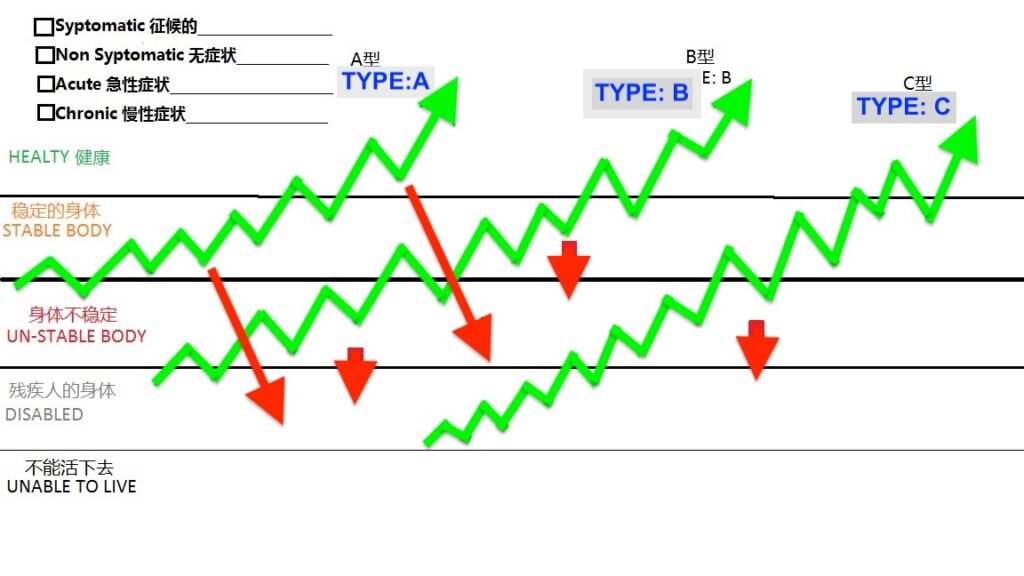
Hydro Structural research paid attention to the bodies that couldn’t tolerate the same mistakes plaguing body manipulation—the sensitive, unstable ones. Those bodies don’t lie. They exposed which methods actually corrected optimal function without creating new problems.
The conclusion was uncomfortable for the industry:
External manipulation isn’t just risky.
It’s wrong by design.
Even the people who seem “addicted” to it are slowly being destabilized. The damage just takes its time showing up—like a very patient invoice.
Sure, people can destabilize themselves through extreme sports. But the real irony? Some people pay professionals to keep them in the danger zone—just to get a stress-hormone buzz.
That’s not healing.
That’s adrenaline with a treatment table.
True correction doesn’t thrill the nervous system.
It reassures it.
And when stability returns, there’s no show—
just a body quietly doing what it was always meant to do.
Feeling Something ≠ Getting Fixed
Thrill-seekers love chaos.
Reality: chaos hurts.
Force Isn’t Healing
The louder it feels, the worse it probably is.
Hydro-Structural
Quiet. Natural. Permanent.
Your Body
Stops being a drama queen.
Starts being a body again.
The Show
Removed.
The Results?
Unmissable.
How to Learn?
Take the Online Course
Fastest way to know for yourself that the body can be corrected effortlessly using Hydro Structural is to learn right now online and try for yourself.
01
Live Seminar
Take a course in at a live seminar and learn from a skilled practitioner how to do Hydro Structural Correctly.
02
Private Training
Maximize your skill levels by booking an in office consultation to learn how to fix all the cases you have been struggling with.
03
Teach Hydro Structural
Hydro Structural only has one correct way to do things. As soon as you demonstrated you have mastered theses skills you are eligible for colaboration.
04
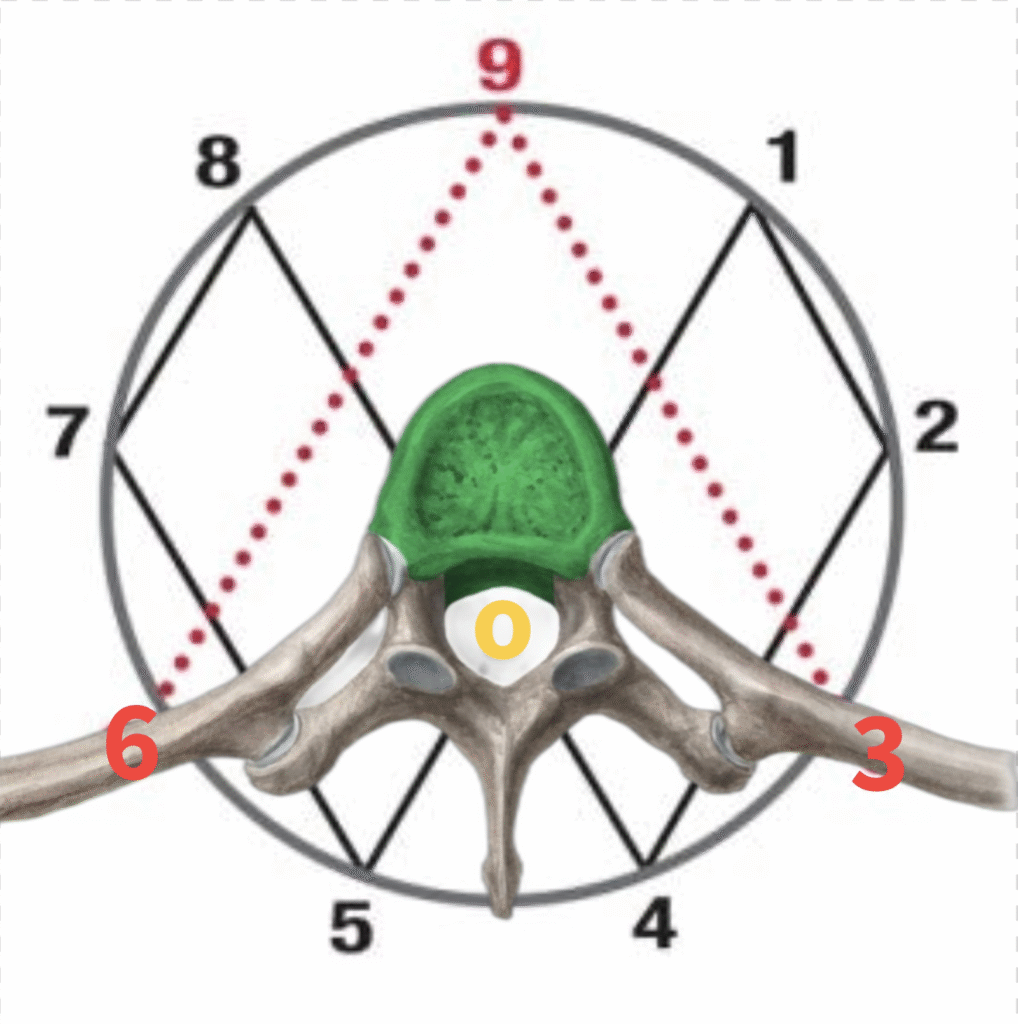
ABOUT Hydro structural
The Vision of Hydro Structural
Hydro Structural envisions a new era of body correction—one rooted in science, precision, and respect for the body’s natural design. Our goal is to move beyond outdated, force-based manipulation and establish a method with surgically precision that restores structure from the inside out, using the body’s own bio hydraulic and biomechanical intelligence.
We aim to redefine physical medicine into a discipline of predictable, measurable, and lasting correction—where practitioners no longer rely on guesswork or arbitrary symptom manipulation , but on clarity, control, and true bodily integrity.
OUR BENEFITS
Why choose us?
COMPLETION OF RESEARCH
Many techniques change year after year because they fail to deliver on their original promises.
Hydro Structural, by contrast, is a complete and finished system—one that practitioners can master in a relatively short time. Once learned, they possess the skills to consistently correct and restore the body using Hydro Structural alone.
Unlike many other methods that remain incomplete and require students to constantly relearn as new flaws are discovered, Hydro Structural provides a stable, fully realized framework that produces predictable, lasting results.
Experience
Training Methods
Success Rate
Become Certified Professional Therapist
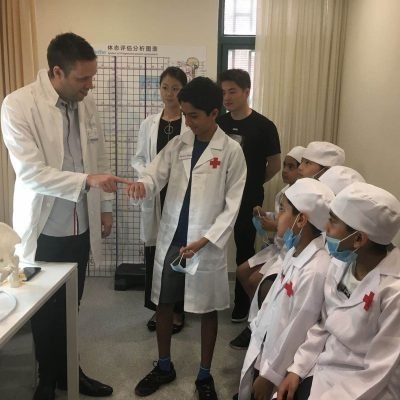
High Quality Treatment and Best Equipment
Friendly High Integrety Instructors
Affordable Course Prices
Guaranteed Healing
PARTNER
Hydro Structral Partnerships & Associations





(Fully Booked) Las Vegas, May 22-24, 2026
Be the first to review “(Fully Booked) Las Vegas, May 22-24, 2026” Cancel reply
Reviews
There are no reviews yet.